Customers shouldn't have to wonder when their technician will arrive, whether an appointment has changed, or if additional service is needed. Discover how clear, proactive communication improves customer trust, reduces confusion, and creates a better service experience.
Why Customer Communication Matters in Field Service: Keep Customers Informed and Build Trust
For service businesses, doing great work is only part of delivering a great customer experience.
Customers also want to know when someone is coming, who's performing the work, whether their appointment is still on schedule, and what happens if something changes.
When that information isn't communicated clearly, even a routine service appointment can become frustrating.
A homeowner may rearrange their day waiting for a technician who was delayed. A pool service customer may wonder whether their weekly cleaning was completed. A cleaning customer may be surprised when a different employee arrives without any notice.
These situations aren't always caused by poor service. Often, they're simply the result of poor communication.
Keeping customers informed before, during, and after appointments is one of the simplest ways to build trust, reduce confusion, and create stronger long-term relationships.
Here's why customer communication matters and how service businesses can improve it.
1. Customers Shouldn't Have to Wonder When You're Coming
One of the most common frustrations customers experience is uncertainty about their appointments.
They may know they're scheduled for Tuesday, but that doesn't necessarily tell them when to expect someone.
For recurring services, customers may become accustomed to a technician arriving around the same time each week. If that schedule changes unexpectedly, they may wonder whether the appointment was missed.
For services that require someone to be home, the inconvenience can be even greater.
Proactive appointment communication helps set clear expectations.
Depending on the service, that may include:
Appointment confirmations when service is scheduled
Reminders before an upcoming appointment
Expected arrival times or service windows
Notifications when an appointment is rescheduled
Updates when a technician is running late
A simple message can eliminate a surprising amount of uncertainty.
Example appointment reminder:
"Hi Sarah, this is a reminder that your pool cleaning is scheduled for tomorrow between 9:00 AM and 11:00 AM. We look forward to seeing you!"
Customers appreciate knowing what to expect, especially when they need to make arrangements around a service visit.
2. Communicate Schedule Changes as Soon as Possible
No matter how carefully you plan your schedule, unexpected changes happen.
A technician may call in sick. Equipment may break down. A previous job may take longer than expected. Severe weather may make outdoor work unsafe.
These situations are part of running a service business.
What matters is how you communicate them.
Imagine a landscaping customer expecting service on Thursday. Heavy rain forces your crew to postpone the appointment until Friday.
If the customer receives no update, they may assume your team forgot about them.
But a short notification explaining the change can turn a potentially frustrating experience into an example of dependable service.
Example schedule change notification:
"Hi Michael, due to today's weather conditions, we've moved your lawn service from Thursday to Friday. We apologize for the change and appreciate your understanding."
When possible, notify customers as soon as a schedule change is confirmed.
Be clear about what changed, when they should now expect service, and whether they need to take any action.
Customers are often more understanding of delays when they aren't left guessing.
3. Let Customers Know When Their Technician Changes
For recurring service businesses, customers often become familiar with the person who regularly visits their property.
A homeowner may recognize their pool technician, cleaning professional, or lawn care crew.
Over time, that familiarity can become an important part of the customer relationship.
When a different technician arrives unexpectedly, customers may have questions.
Who is this person? Are they supposed to be here? Do they know the property's special instructions?
A quick notification can help prevent confusion.
Example technician change notification:
"Hi Jennifer, just a quick update: Alex will be handling your scheduled pool service this week instead of Chris. Your appointment time remains the same."
This is especially valuable for residential cleaning, in-home repairs, and other services where customers may be concerned about who has access to their property.
Communicating technician changes demonstrates professionalism and helps customers feel comfortable with your team.
4. Keep Customers Informed About Service Concerns
Communication shouldn't stop once the technician arrives.
Field employees are often the first to notice problems that customers may not be aware of.
A pool technician might discover a leaking pump or unusually high chemical demand.
A lawn care professional may notice an irrigation issue or signs of lawn damage.
A cleaning technician may identify an area requiring additional attention.
These observations create opportunities to provide better service.
But simply identifying a concern isn't enough.
Customers need to understand what was found, why it matters, and whether any action is recommended.
For example:
"During today's pool service, we noticed reduced water flow from your pump. Your filter may need additional maintenance. We recommend having it inspected before the issue becomes more serious."
This type of communication shows customers that your business is paying attention to their property—not simply completing a checklist.
It can also create opportunities for additional services when appropriate.
The important distinction is to make recommendations based on genuine customer needs rather than treating every observation as a sales opportunity.
5. Recommend Additional Services Without Being Pushy
Good customer communication can help businesses grow.
Customers may not know that your company offers additional services beyond what they currently receive.
A lawn care customer might be interested in seasonal cleanup.
A pool cleaning customer may need filter maintenance or equipment inspection.
A residential cleaning customer might appreciate occasional deep cleaning.
The key is to make recommendations relevant and timely.
For example:
"Hi Lisa, while completing your regular cleaning today, we noticed the patio could benefit from a pressure washing. We offer that service as well. Let us know if you'd like an estimate."
This approach feels helpful rather than intrusive because the recommendation relates directly to something the customer may need.
It also gives customers the opportunity to approve additional work before it is scheduled or performed.
Clear communication can turn routine service visits into opportunities to strengthen relationships and introduce valuable services.
6. Let Customers Know When Work Is Completed
Not every customer is home when service takes place.
For pool cleaning, lawn care, pest control, and many other recurring services, technicians may complete their work while the customer is away.
Without an update, customers may not know whether the appointment occurred.
A service completion notification can provide reassurance.
Depending on the business, that message might include:
Confirmation that the appointment was completed
The date and time of service
A summary of work performed
Relevant service notes or observations
Recommended follow-up work
Information about the next appointment
Example service completion message:
"Your scheduled pool cleaning has been completed. Today's service included skimming, brushing, basket cleaning, and water testing. We also noted that your filter may need cleaning soon."
These updates help customers understand the value of the service they're receiving.
They can be particularly useful for recurring services where the work isn't always immediately visible.
7. Make It Easy for Customers to Ask Questions
Communication works best when it goes both ways.
Customers should have a convenient way to contact your business if they need to change an appointment, report a concern, request additional work, or ask a question.
For example, a homeowner may need to provide a new gate code before their next pool cleaning.
Another customer may want to request an additional cleaning before guests arrive.
When customers aren't sure how to reach your business, small issues can become bigger problems.
A consistent communication process helps ensure customer requests are received, documented, and addressed.
It also reduces the chance of important details getting lost between phone calls, text messages, and handwritten notes.
8. Use Field Service Software to Keep Communication Organized
As a service business grows, managing customer communication manually becomes more challenging.
A company with five appointments per day may be able to handle most updates through individual calls or messages.
But when you're managing dozens of appointments, multiple technicians, recurring services, and last-minute schedule changes, keeping everyone informed requires more coordination.
This is where field service management software can help.
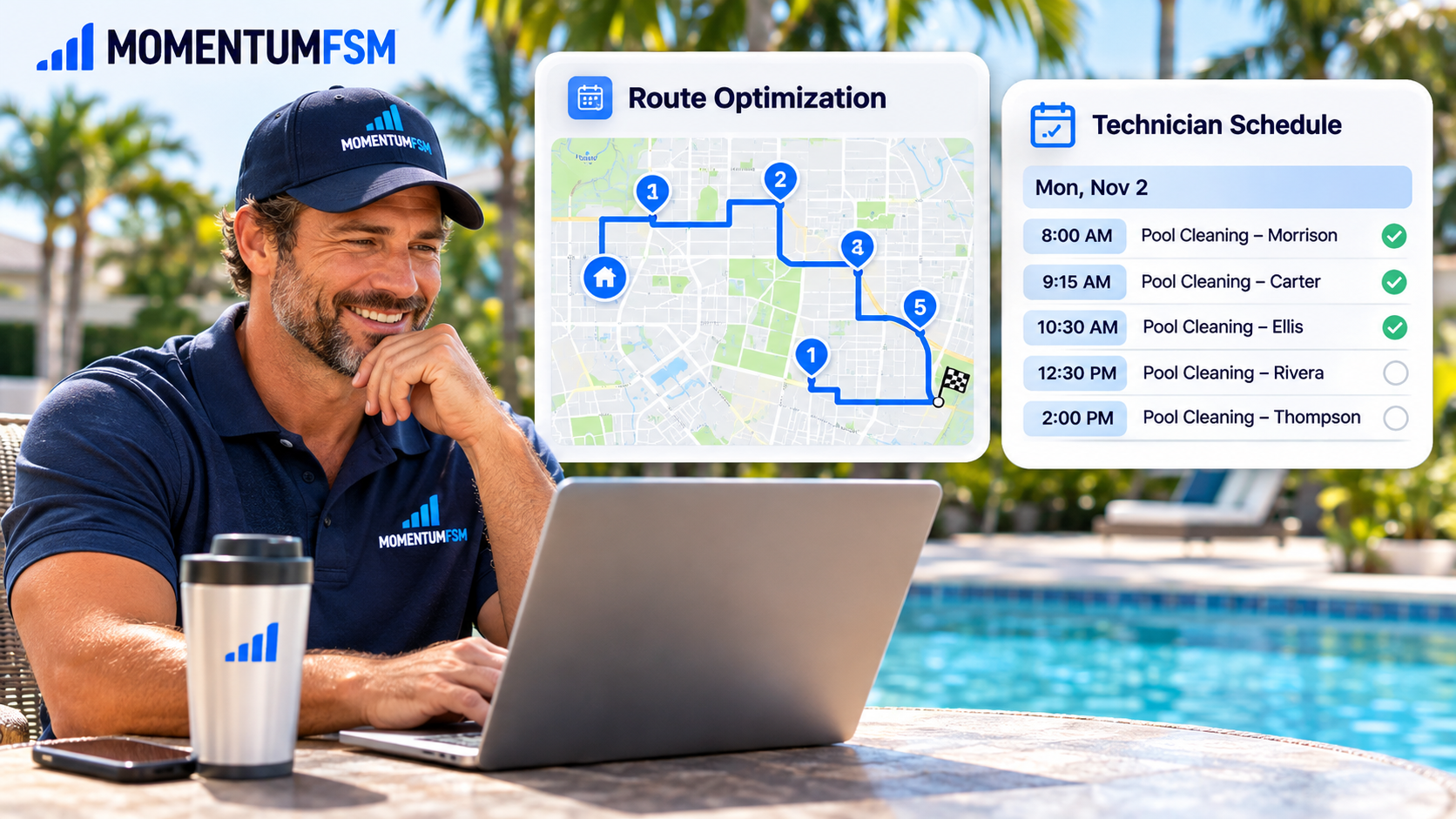
Momentum FSM brings together scheduling, customer management, technician assignments, and client communications so businesses can keep important information connected.
Rather than relying entirely on disconnected messages and separate spreadsheets, businesses can organize customer information alongside their service operations.
With a more connected workflow, it's easier to manage communication around:
Upcoming Appointments
Keep customers informed about scheduled services and expected appointment details.
Schedule Changes
Communicate changes when appointments need to be moved or adjusted.
Technician Assignments
Keep track of who's assigned to each job so customers can receive accurate information.
Service Concerns
Document important observations and follow-up recommendations.
Additional Service Requests
Maintain customer information and service requests together as new work is scheduled.
Completed Services
Help customers understand what was performed and what may need attention next.
The goal isn't to overwhelm customers with constant notifications.
It's to make sure they receive the information that matters, when it matters.
9. Find the Right Balance With Customer Notifications
More communication isn't always better.
Too many messages can become annoying, especially for customers receiving weekly or even daily services.
The best approach is to communicate when the information is useful.
For most service businesses, the highest-value updates involve:
Confirming appointments
Reminding customers of upcoming service
Communicating meaningful delays or changes
Notifying customers of technician substitutions when appropriate
Reporting important service concerns
Confirming completed work when helpful
Consider your customers' preferences, the type of service you provide, and whether the information requires their attention.
For example, a customer who receives weekly pool service may appreciate a completion summary but not need multiple reminders before every routine visit.
A homeowner waiting for an HVAC repair, on the other hand, may value a narrower arrival window and an update if the technician is delayed.
Effective communication is about relevance, clarity, and consistency—not simply sending more messages.
Final Thoughts: Communication Is Part of Great Service
Customers remember more than the work your team performs.
They remember whether your business was reliable, whether they knew what to expect, and how you handled situations when plans changed.
A simple appointment reminder can prevent confusion.
A quick technician update can build confidence.
A thoughtful service recommendation can help a customer avoid a larger problem.
And a timely schedule change notification can turn an inconvenience into an example of excellent customer service.
For small service businesses, these details can make a meaningful difference in customer satisfaction and long-term loyalty.
Great service gets the job done. Great communication helps customers feel confident about the entire experience.
Keep Your Customers Connected With Momentum FSM
Your customers shouldn't have to wonder when service is scheduled, who's assigned to their appointment, or whether important information has changed.
Momentum FSM helps service businesses organize customer information, appointments, technician assignments, and communications in one connected platform.
Spend less time coordinating information across disconnected tools and more time delivering the dependable service your customers expect.
Start Your Free Trial With Momentum FSM