How to turn one-off repairs into predictable monthly revenue — pricing tiers, selling in the field, and managing agreements without losing track of renewals.
If you run an HVAC, plumbing, landscaping, or pest control business, you know the feast-or-famine cycle well. Peak season hits and your team is booked solid. Then the off-season arrives and the phone goes quiet, while overhead doesn't.
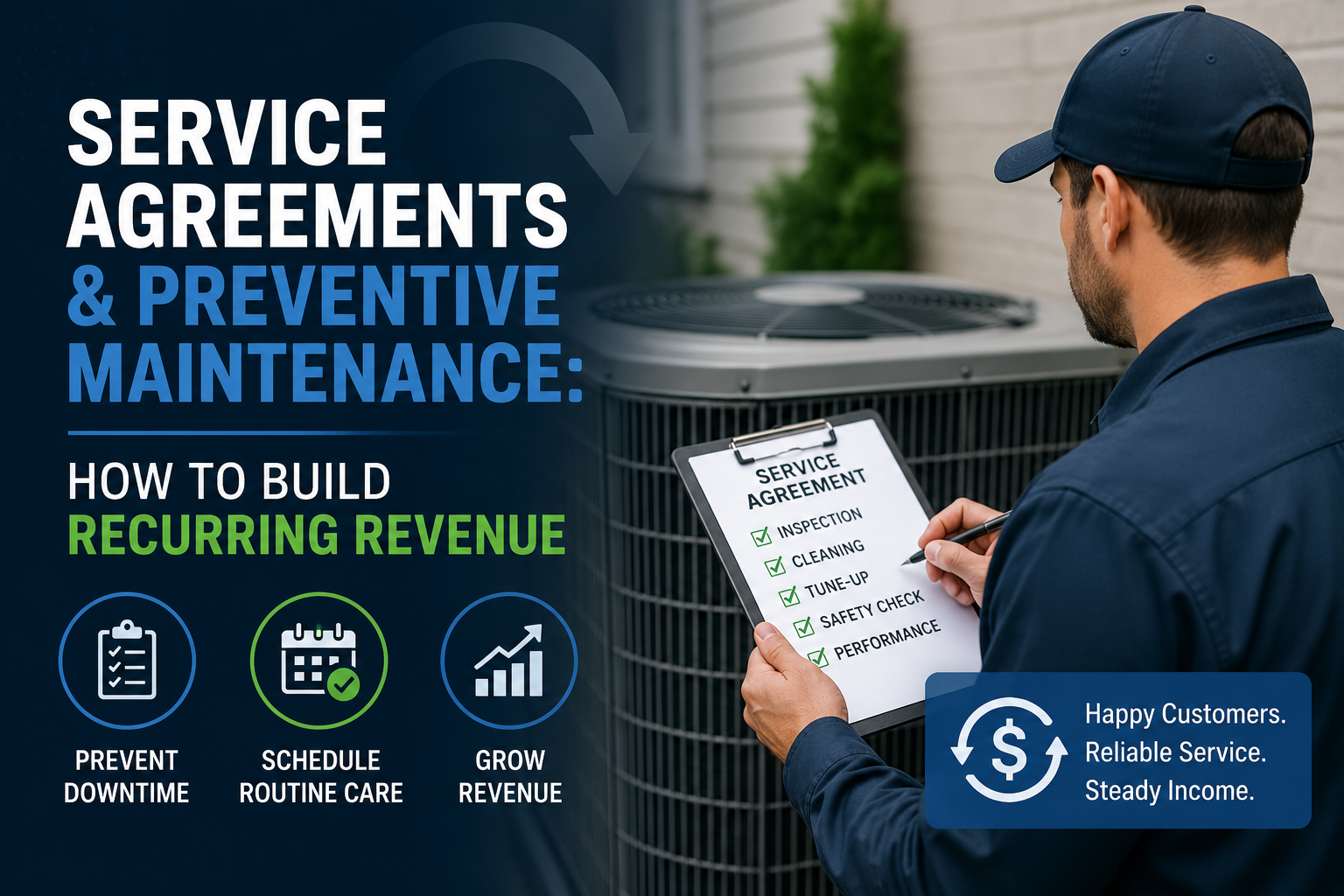
The fix isn't working harder during the busy months — it's building a base of recurring revenue that doesn't depend on the weather or a customer's emergency. That's what a service agreement does: instead of waiting for something to break, you get paid on a schedule to keep it from breaking in the first place.
Why recurring revenue changes the business
A break-fix model means every dollar you make depends on something going wrong. A service agreement flips that — customers pay monthly, quarterly, or annually for ongoing maintenance, and you become their default provider instead of one of three quotes they're comparing.
The practical upside:
Predictable cash flow. A baseline of recurring payments each month makes it easier to plan hiring, payroll, and equipment purchases without gambling on how hot next August will be.
First call, not a competing quote. When a covered system fails, the customer calls you — they're not searching around for someone cheaper.
Higher business value. If you ever sell, a buyer will pay more for predictable contract revenue than for the same total revenue built entirely on emergency calls.
Why customers should actually want one
Most customers push back on maintenance plans because the equipment "seems fine." Reframing it around cost, not obligation, tends to land better:
Reactive repairs cost more — after-hours labor, rush parts, and damage the failing part caused on its way out.
Downtime is expensive. A commercial client with a broken system isn't just annoyed — they may be losing production, tenants, or business.
Neglected equipment fails earlier and can void a manufacturer's warranty, which often requires documented, regular maintenance.
Building the offer
1. Know your customer base. Residential and commercial clients need different things — a facility manager wants asset tracking and predictable scheduling across dozens of units; a homeowner wants their AC to survive July.
2. Define the scope precisely. "Inspect system" isn't a scope of work. "Calibrate thermostat, clean condenser coils, check refrigerant levels, inspect ductwork" is — it's what makes the plan feel like a real service instead of a subscription fee.
3. Structure it in tiers. A "good / better / best" model gives customers a choice instead of a yes/no decision:
Basic — one or two visits a year, a standard checklist, small discount on repairs.
Preferred — priority scheduling, steeper repair discounts, some parts included.
Premium — all-inclusive, fastest response times, parts and labor covered for anything that comes up during the term.
Most customers land in the middle tier once there's a premium option to compare it against.
4. Price for the visit, not just the plan. Know your real cost per truck roll — labor, fuel, vehicle wear, materials — before you apply a margin. Then layer in what the plan is actually worth to the customer: skipped weekend overtime fees, guaranteed response windows, priority scheduling. That's worth charging for on its own.
Selling it in the field
The best time to offer a maintenance plan isn't a cold call — it's right after a technician just fixed something. The customer is already feeling the cost of a surprise breakdown, which makes the pitch land naturally instead of as an upsell:
"I replaced the blower motor today — the coils were pretty dirty, which is likely what caused the overheating. We have a plan where we come out twice a year to clean and check the system before it gets to this point, and it includes a discount on today's repair."
Common objections are usually easy to handle once you've heard them a few times:
"Too expensive" → break it into a monthly number, and compare it to the cost of one emergency repair.
"It's brand new, it doesn't need maintenance" → new equipment is exactly what warranty terms usually require documented maintenance for.
"I'll just call when it breaks" → be honest about the tradeoff: non-plan customers often wait longer during peak season.
Keeping the contract simple to manage
None of this works if agreements live in a spreadsheet or a stack of signed PDFs. At minimum, you need a way to:
Track which customers and equipment are covered, and under what terms
Automatically schedule the recurring visits a contract promises
Bill on the agreed cycle without someone manually invoicing every account
Flag contracts coming up for renewal before they lapse
This is the part that becomes unmanageable fast without software once you're past a handful of agreements — missed visits and late renewals cost you the trust the whole model depends on.
How this works in Momentum FSM
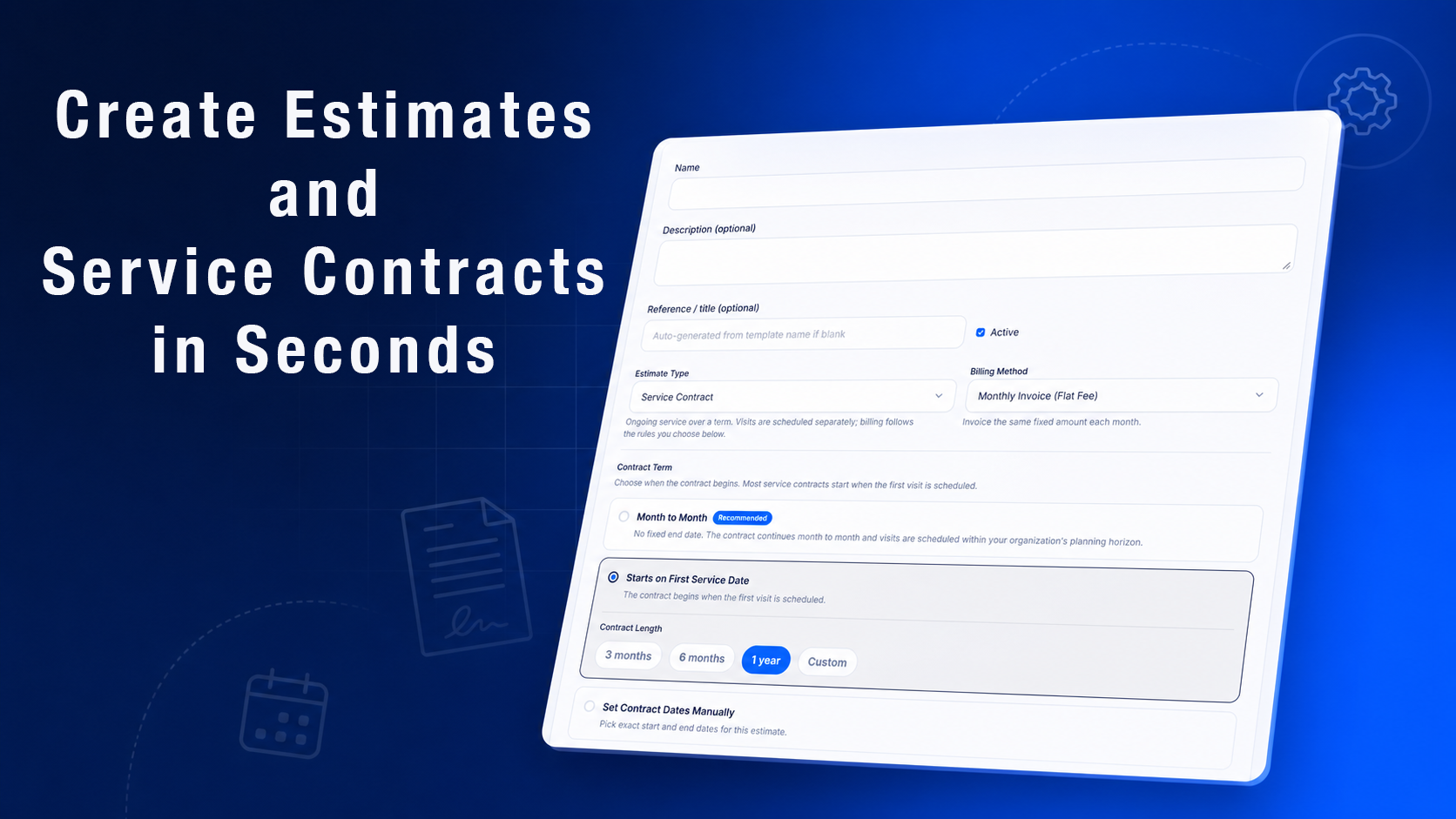
Momentum FSM treats a service agreement as its own record, separate from a one-off job. A contract carries its own billing cycle, renewal logic, and rate schedule, and it can be created directly from an approved estimate — so a technician's upsell in the field turns into a running contract without someone re-entering it from scratch.
Because visits generated from a contract land on the same schedule and route as everything else, your office doesn't need a separate system to track "maintenance customers" apart from regular job customers — it's all one calendar. And when a contract's renewal date approaches, that's visible without digging through a customer's history to figure out when they signed.
If you're currently tracking service agreements by memory or spreadsheet, that's usually the first place things start to slip — a missed renewal or a scheduling gap costs you the exact customer this whole model is supposed to lock in.