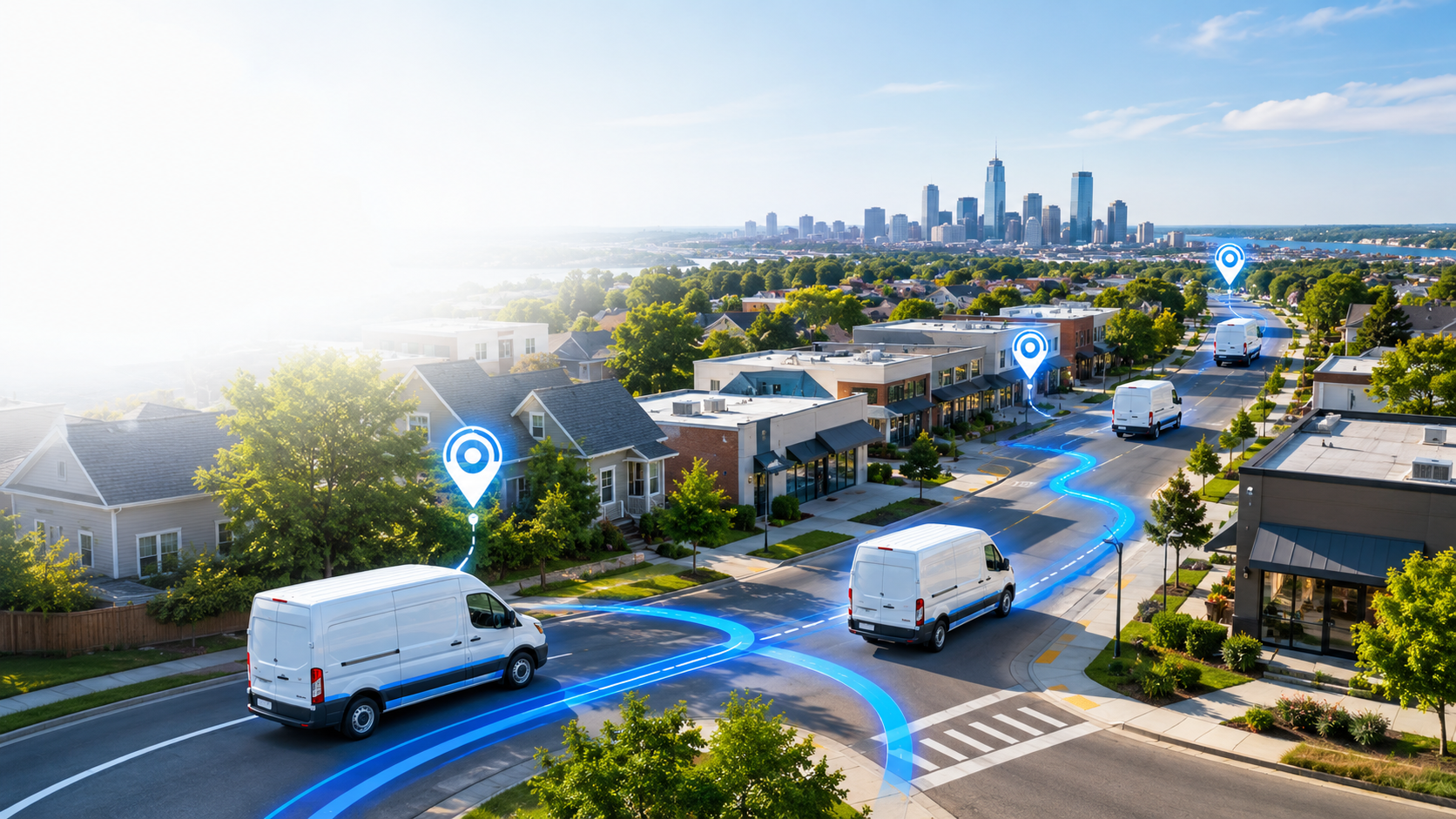
Faster response times usually aren't about hiring more techs, they're about cutting the time the ones you have spend driving. Here's what actually moves that number.
Customers don't wait well anymore. Nobody wants to hear "somewhere between 8 and 5" and then clear their whole day for it. If a competitor can give a tighter window and show up on time, that's who gets the call next time.
Faster response times usually aren't about hiring more technicians. They're about getting more out of the ones you already have, mostly by cutting the time they spend driving instead of working.
Why manual dispatching runs out of road
A whiteboard and a dispatcher's memory work fine at a small scale. Once you're juggling more than a handful of trucks a day, it breaks down fast: a dispatcher has to remember who's closest, who has the right skills, who has the parts on their van, and then manually call to redirect anyone. It's slow, and it depends entirely on one person keeping the whole picture in their head.
Software doesn't replace the dispatcher's judgment, but it takes over the part that's just math: distance, timing, and who's actually free.
Get the right person there the first time
A fast response means nothing if the technician who shows up can't fix the problem. Sending someone without the right certification or experience just means a second visit later, plus a customer who's now annoyed twice instead of once.
Matching jobs to technicians by skill, not just availability, is one of the simplest ways to raise your first time fix rate. It takes a bit more setup, tracking who's qualified for what, but it pays for itself the first time it prevents a callback.
Cluster the day instead of crisscrossing the city
Windshield time is the biggest hidden cost in field service. Every mile a technician drives is a mile they're not billing.
Two things help the most:
Group jobs by area. A technician who handles every north side job in one block, instead of bouncing between north and south all day, gets more done and drives less.
Let the schedule flex. If a job finishes early or a customer cancels, the next best job should be easy to pull forward, not something a dispatcher has to reconstruct from scratch.
Neither of these needs to be fully automatic to help. Even a dispatcher glancing at a map before assigning the day's jobs will cut a meaningful amount of drive time.
Keep everyone in the loop without more phone calls
A lot of dispatch delay isn't the driving itself, it's the back and forth. A dispatcher can't see where anyone is, so they call around. A technician doesn't get a schedule change until they happen to check their phone. A customer calls to ask for an ETA because nobody told them one.
Cutting that lag usually comes down to a few things:
Dispatchers can see where technicians are without calling to ask
Schedule changes reach the technician's phone directly, not through a callback
Customers get a heads up before they have to ask for one
None of this needs to be complicated. It just needs to replace phone tag with something that updates on its own.
Handling the inevitable emergency
Something will always jump the line, a burst pipe, a heating system down in January. The businesses that handle this well aren't the ones who never get surprised. They're the ones with a clear, repeatable way to slot an urgent job in without quietly wrecking everyone else's day. That usually means having an honest sense of which jobs can slide and a fast way to let those customers know, rather than scrambling to figure it out from scratch every time.
How this works in Momentum FSM
Momentum FSM builds daily routes around your actual jobs, with stop order and live progress tracking so your office can see where a route stands without calling a technician to ask. Employees carry their own service groups and field teams, so assigning work by skill set is part of how scheduling already works, not an extra step someone has to remember.
None of this makes the driving disappear. It just means less of the day gets wasted figuring out where everyone is and who's supposed to be where next.